

When Assistant Superintendent Jim Kortas sat down to explain how his team runs two FireFly AMP autonomous mowers across Gator Creek Golf Club, he didn’t lead with the mowing itself. He led with what happens between the fairways.
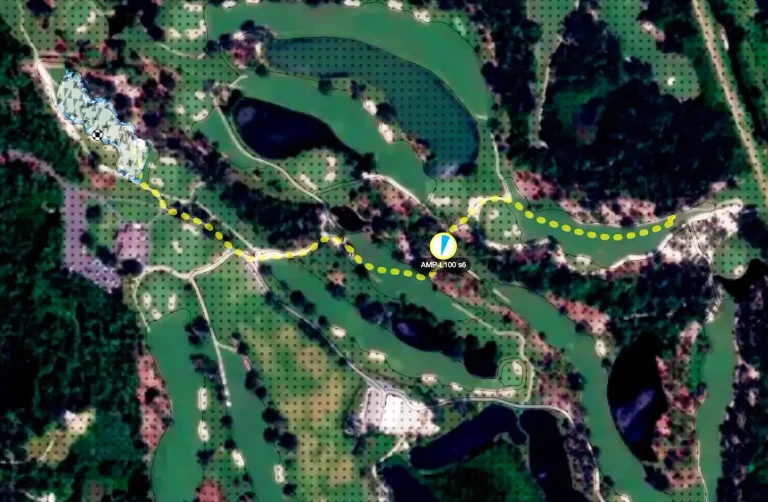
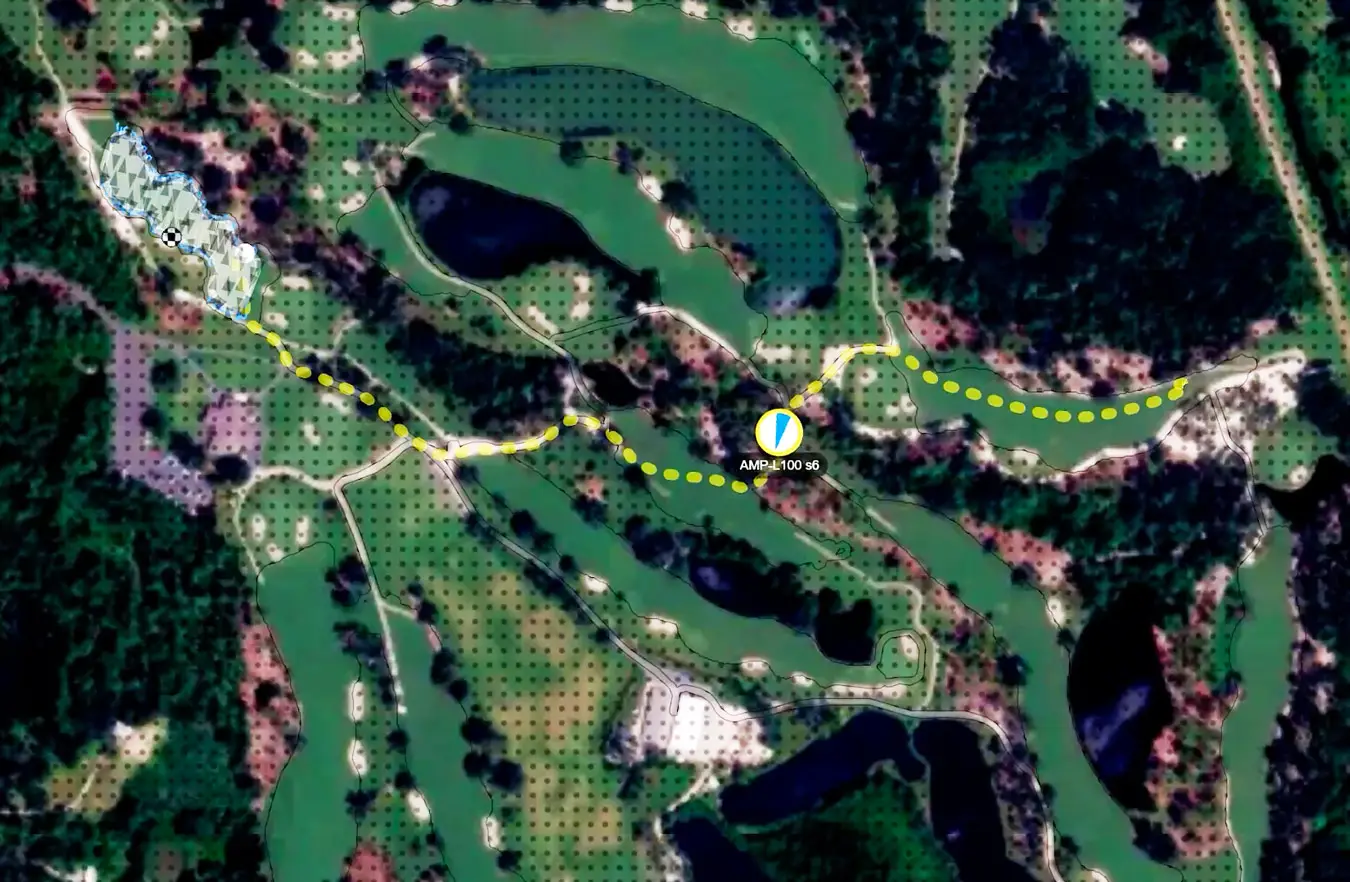
FireFly’s Path Linking feature, now in its 2.0 release, allows AMP mowers to autonomously navigate from one fairway to the next, choosing their own efficient route through pre-built transport paths (with some exceptions, such as public roadways). No one has to physically drive the unit to its next assignment. The machine simply goes.
Jim partnered with FireFly to share how this capability has changed his team’s day-to-day operations — and his story is a great look at what’s possible when autonomy extends beyond the cut itself.
[Video: Jim Kortas, Gator Creek Golf Club — Path Linking in Action]
The Mowing Schedule Behind the Story
To accomplish mowing fairways three times a week, Gator Creek mows all eighteen fairways on Mondays, then splits the course north and south for the rest of the week — nine holes per day, Tuesday through Friday. Accomplishing that without operators is a big time savings. What adds even more value is what happens in the gaps between those fairways — and that’s where Path Linking earns its keep.
Path Linking Has a Growing Impact
Before the feature existed, moving mowers between holes was a manual job. As Jim describes it, an operator sometimes spent nearly as much time walking back to his cart as he did actually managing his primary assignment.
Minimizing manual touchpoints has always been an important goal at FireFly, and we have been releasing incremental improvements. First came point-to-point maps connecting adjacent holes, which increased autonomous run time at many courses.
With Path Linking 2.0, the capability expanded into dynamic full-course routing utilizing artificial intelligence. Instead of following a single fixed route, the QuickPlan software now intelligently combines the transport paths already built into the course map, choosing the most efficient way to get a mower from any point to any destination — on its own.
One Operator, Two Mowers, Getting More Done
The clearest benefit for Gator Creek has been staffing efficiency. With Path Linking, one operator can send both AMP units out to mow while personally handling a separate task, like mowing collars or spot spraying.
Jim put it simply: a lot of work gets done with a fairly low training burden on management or staff. He’s even run both mowers himself from the seat of a spray rig, choosing a destination and mow pattern with a single button press on the tablet.
It’s a detail worth sitting with: the same machines Gator Creek purchased have grown more capable over time, without new hardware and without new operators to train.
“I love that these units have more functionality today than they did the day we bought them.” – Jim Kortas, Assistant Superintendent at Gator Creek Golf Club

Built-In Flexibility for the Unplanned Day
Every superintendent knows the real test isn’t the routine day — it’s the one that goes off script. Gator Creek doesn’t run tee times, which means members can jump on at any point: playing just the back nine, walking the course at first light, or simply moving faster than expected and covering more ground.
Path Linking is built for exactly this kind of flexibility. Any mower can be redirected from any fairway to any other fairway, on demand, without anyone walking out to physically drive it there. The AI-powered software calculates a sensible route using the paths already in place.
“If we need to change the plan on the fly, it’s easy to send one or both mowers from any fairway to any other fairway without having an operator jump on the back and drive it there, as the software is intelligently combining the paths we’ve already made into a sensible route to get where it’s going.”
Jim shared two real examples from Gator Creek’s course:
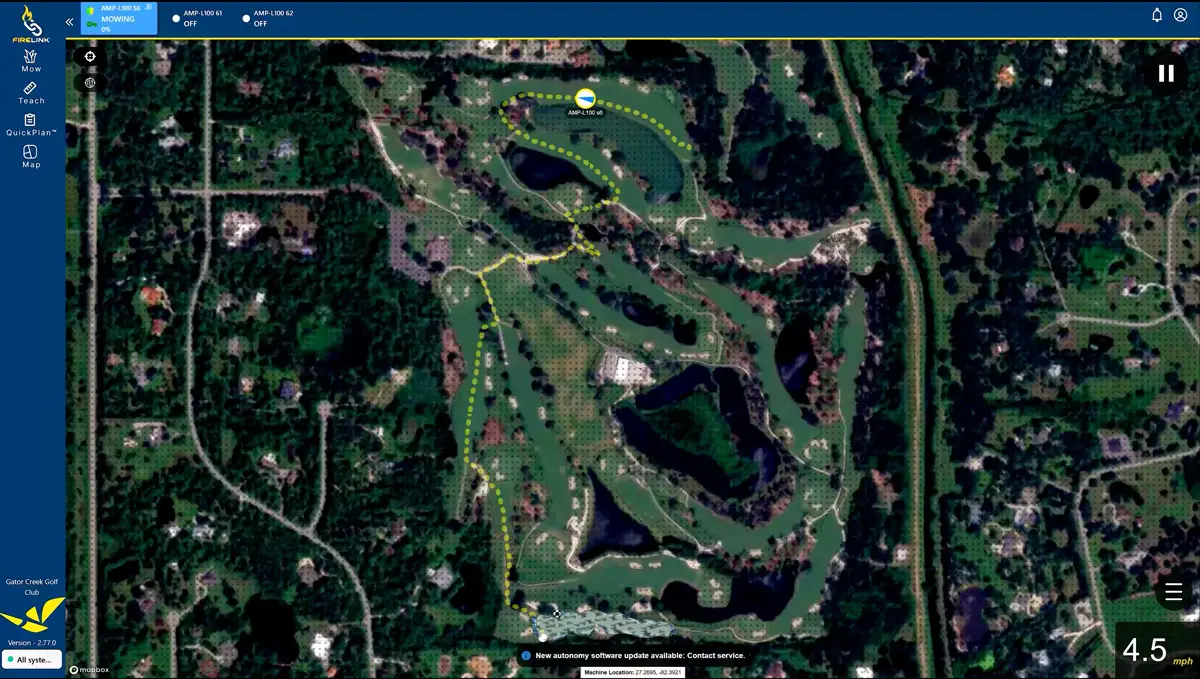
The long haul. To demonstrate the system’s range, Jim sent a mower from the seventh hole, at the northern edge of the property, to the sixteenth hole at the southern end — more than 3,000 feet as the crow flies, and considerably farther by safe transport path. The system worked out a complete route on its own. It’s an extreme case, and Jim is candid that a longer autonomous trip like this takes more time to plan than simply asking a team member to drive the unit over at speed. But knowing the option exists matters on the days when every other staff member is already tied up with critical tasks.
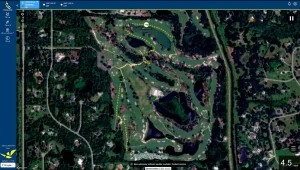
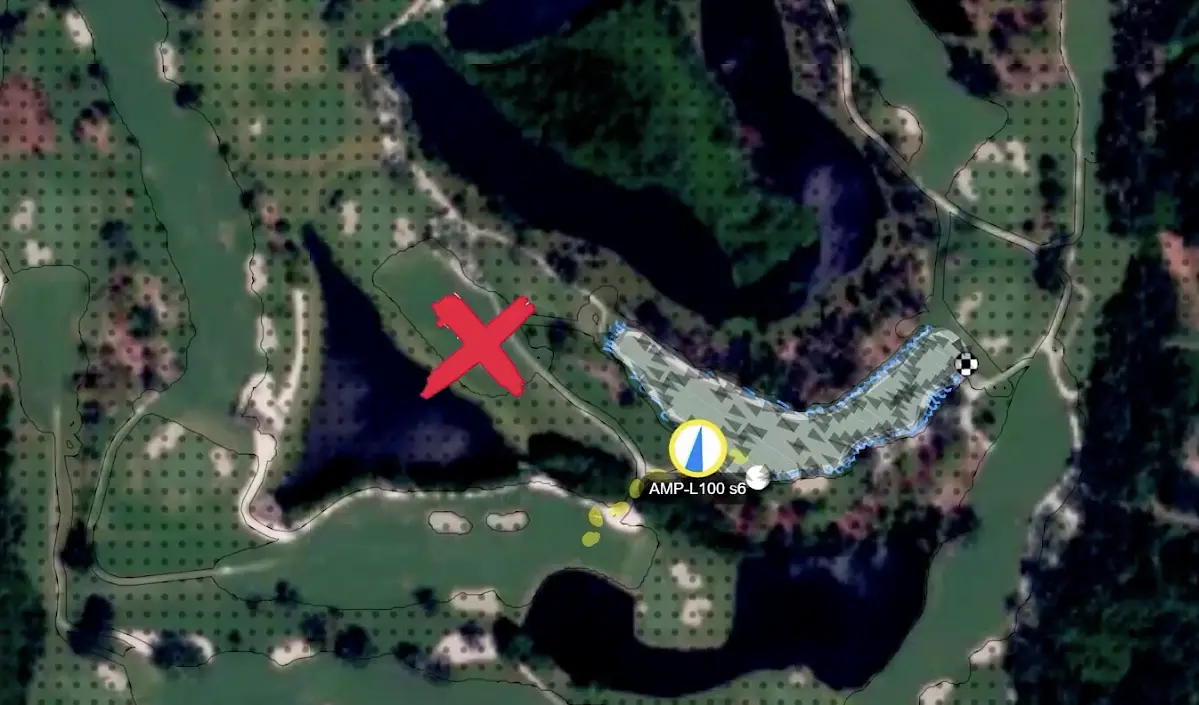
The quick correction. In a real-life example, to accommodate play, Jim had one of his AMP units skip Fairway 3, sending it from the 2nd hole directly to the 4th hole, intending to circle back later. He’d been spraying fairways, and forgetting that 3 hadn’t been mowed yet, he made a pass before the mowers had reached it. Rather than a scramble, the fix took one phone call to his operator and a temporary disable of the map for hole 3, preventing the mower from cutting through freshly applied PGR.
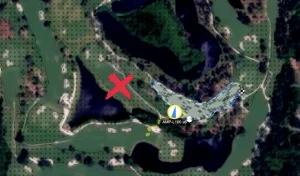
Neither scenario was in the day’s original plan. Both were handled without disrupting the rest of the course.
The Net Result
Asked to sum up his experience, Jim didn’t hesitate: the ability to remotely move mowers around the course has been a net gain for productivity, and it’s driven real process improvements for his team. Fewer walked miles, fewer manual handoffs, and more flexibility to adapt when the day doesn’t go according to plan.
That’s the promise of Path Linking in practice: not just autonomous mowing, but autonomous movement — the connective tissue that turns individual cuts into a genuinely self-managing operation.
Curious what Path Linking and FireFly’s AMP autonomous mowers could do for your course?
Schedule a free consultation to talk through your course layout, mowing schedule, and where autonomy could save your team the most time.