UPDATE September 30, 2026: FireFly has now surpassed 150,000 acres of autonomous mowing.
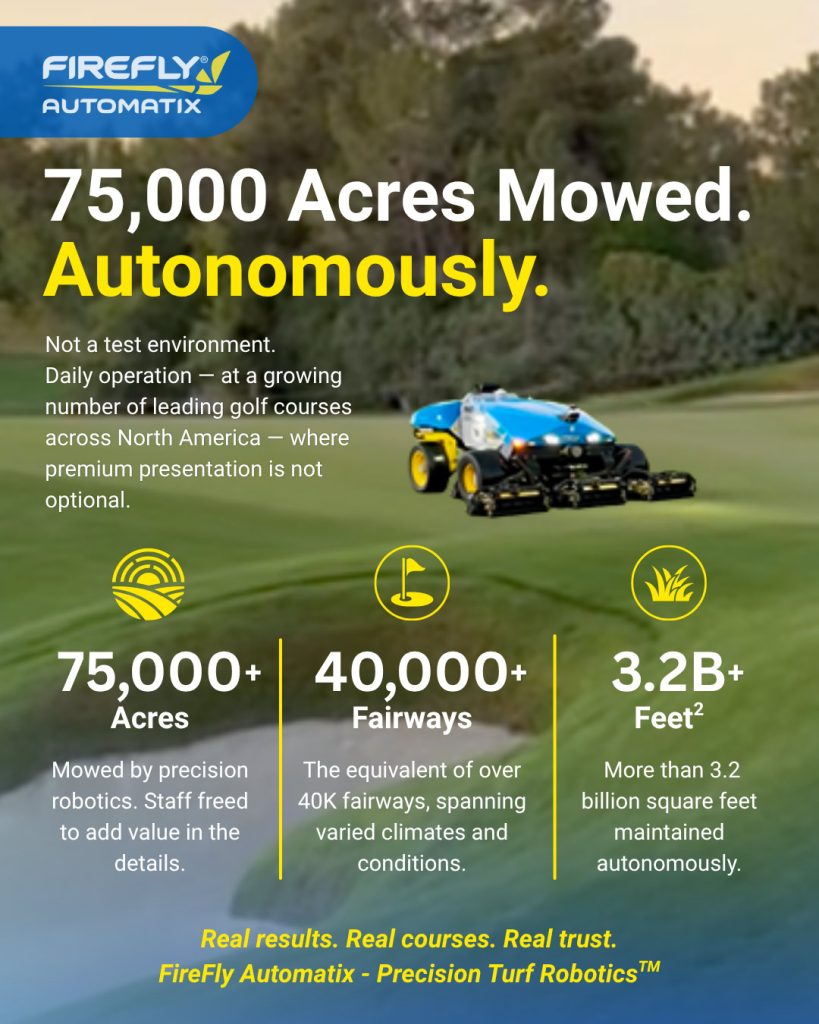
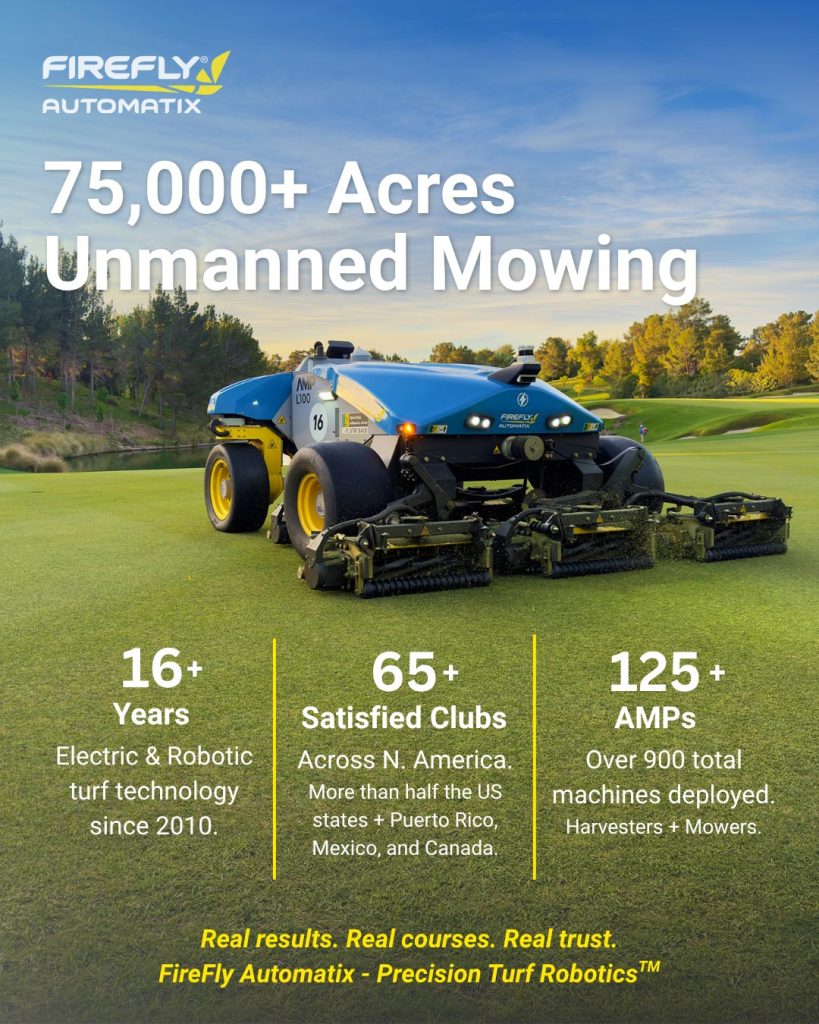
FireFly’s autonomous fairway mowers have now mowed more than 75,000 acres—and counting—across real golf courses with real expectations.
May 11, 2026 — The Autonomous Mowing Platform, or AMP, has more than 75,000 acres of autonomous mowing under its belt. At an average productivity of 4.4 acres per hour and with the typical fairway measuring 1.8 acres, that milestone equates to more than 40,000 fairways mowed.
That is not a test environment. It is daily operation at clubs where presentation, consistency, and reliability matter.
Those acres span climates, grasses, and operating styles across North America—including over half the U.S. states plus Puerto Rico, Canada, and Mexico—as well as a pilot program in Australia. As those fairways have added up, one thing has become clear: autonomy alone is not enough.
The real value of an autonomous mower comes from its ability to elevate playing conditions, delivering a cleaner, tournament-quality cut every time. To perform at a level that outpaces anything else on the property. That’s where AMP stands apart. We believe it is not just an autonomous option, but the best fairway mower available. Period.
The result of robotically mowing 75,000 acres is not just experience. It is a set of lessons that define what the best fairway mower must deliver today.
Lesson 1: Precision is what members notice first.
Accuracy and repeatability are at the foundation of creating straight lines, clean edges, and consistent striping every day.
For robotic machines, even small inaccuracies can compound quickly over repeated mowing cycles, which is why we have focused on sub-inch accuracy, precisely defined angles, and repeatable path execution. The result is consistent fairway edges, clean transitions, and striping that holds its shape over time.
This level of precision is not just about appearance, however. It also reduces the need for manual cleanup, ensures the machine delivers the same result every time it operates, and improves playability.
For club leadership, this means one thing: a course that presents the same premium standard every morning, without variability from operators or fatigue.
Lesson 2: Consistency changes what is possible.
Unpredictability is the name of the game for conventional mowing, depending on crew, schedule, and conditions.
With repeatable execution across every acre, practices that were once limited by time and labor become more achievable. More consistent mowing, more precise patterns, and the ability to integrate practices like verticutting more regularly create a more structured and predictable maintenance program.
This leads to healthier turf, better playing conditions, and a higher overall standard across the course.
That consistency is what members feel and what boards invest in.
Lesson 3: Crews are not shrinking. They are shifting.
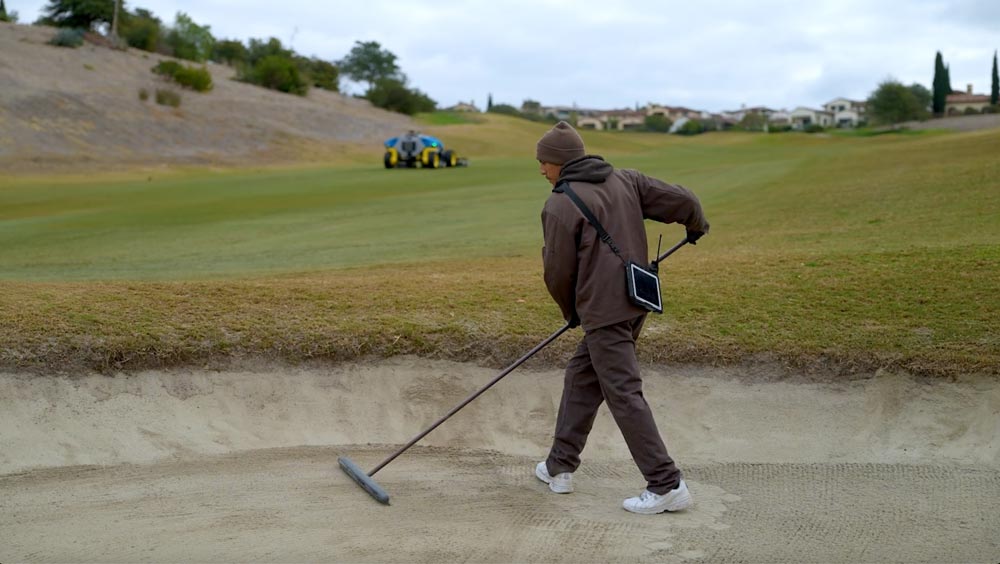
One of the most consistent patterns across deployments is how crews adapt once fairway mowing is no longer a daily manual task.
Teams are not being reduced. They are being redirected.
While autonomy handles the repetition, staff can now focus on bunkers, greens, detail work, and the small things members notice.
The result is a better golf course with the same team, not a smaller one.
Lesson 4: Productivity is measured differently when labor is redistributed.
Conventional mowing productivity is tied to the person in the seat. Autonomous productivity is measured by how much work gets done when that person is reassigned.
With the ability to cover up to 6 acres per hour without an operator, the impact is not just speed. Rather, it is the removal of a constant labor requirement for one of the most time intensive tasks on the course.
Autonomous mowing is not limited by shifts, fatigue, or staffing gaps. It provides the ability to run more often, so courses can move from 2–3 cuts per week to near-daily conditioning.
That shift turns tournament-level presentation into a daily standard, not an occasional event.
Lesson 5: Reducing crew touchpoints unlocks powerful efficiency.
The biggest gains did not come from simply removing labor hours. They came from reducing how often crews need to step in and manage the machine.
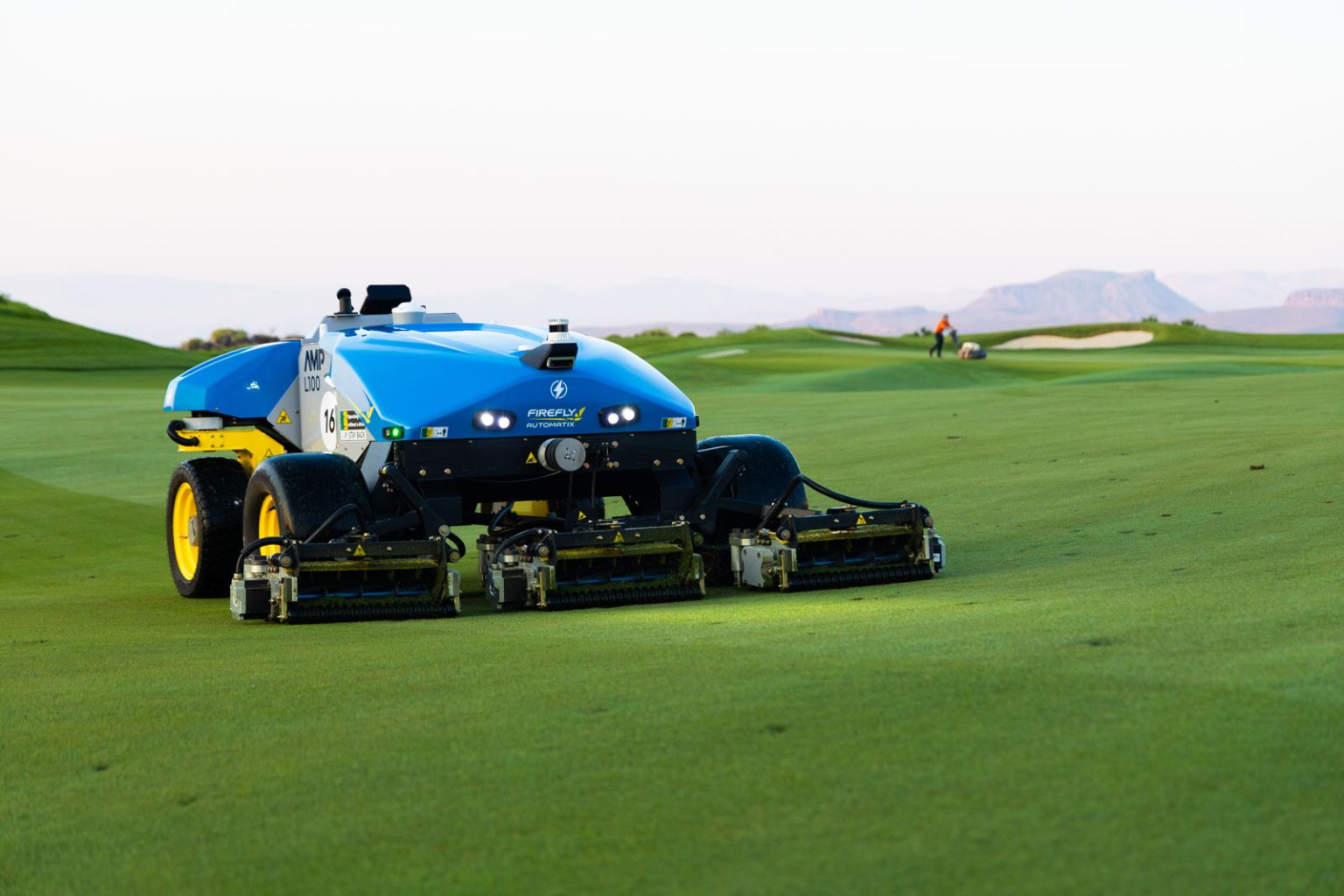
Capabilities like Path Linking and SmartStart™ allow the mower to navigate to its assigned paths on its own, move between fairways, and begin working without precise placement by an operator. Instead of being manually positioned for each job, the machine handles transitions independently.
Upcoming features like Mowing Playlists take this even further by enabling the mower to complete entire sequences across multiple areas without stopping or requiring input.
The result of this ongoing development is powerful: fewer manual touchpoints, less back-and-forth for crews, and a system that moves seamlessly through the course as part of daily operations rather than something that constantly needs attention.
Lesson 6: Reliability earns trust.
Across tens of thousands of acres, reliability, connectivity, and predictable behavior have proven to be the deciding factors in adoption. These priorities have also driven improvements across the platform, including integrated connectivity solutions, like Starlink, that maintain control and visibility even in challenging environments.
As we have refined the robots’ capabilities, we have also strengthened our customer support to ensure customers get the most from their machines. We have added more regional service technicians and customer success managers, as well as a dedicated AMP Support Line.
Reliability is what allows crews to trust the system and shift their focus elsewhere, creating more value for their course.
Lesson 7: Quality of cut can not be sacrificed for automation.
By designing the machine around the cutting unit—rather than retrofitting it around an engine or operator—AMP delivers a level of cut quality customers consistently describe as the best they have seen.
At FireFly, autonomy does not lower expectations. It raises them.
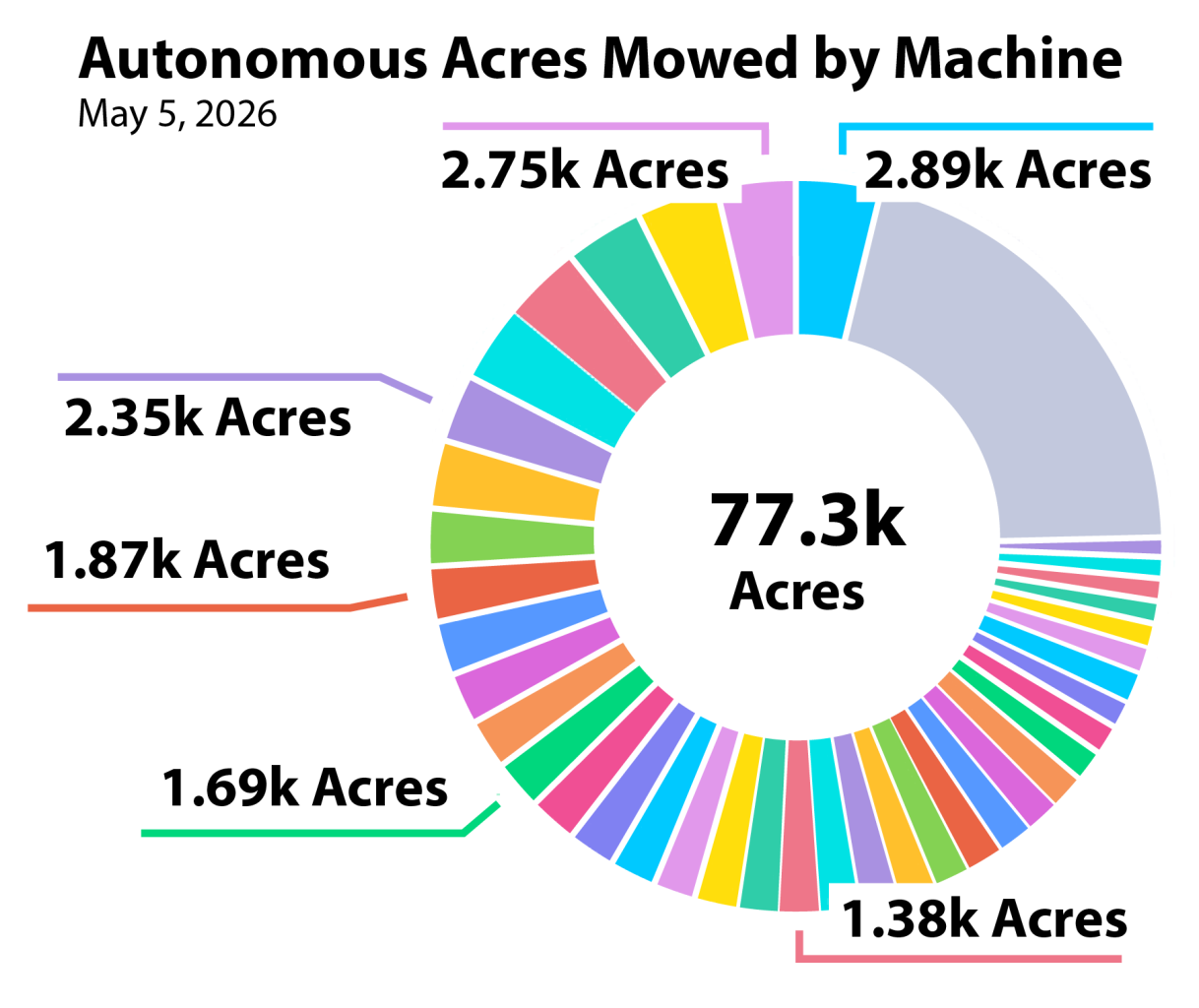
Across 3.2 billion square feet mowed, cut quality, striping, and overall presentation have been continuously refined. Enhancements like powered rear roller brushes further improve after-cut appearance by reducing clumping to maintain a clean, consistent finish.
It is critical to understand that you are not trading quality for automation. Golf course maintenance is changing, and it is time for an upgrade.
Lesson 8: Simplicity reduces both risk and operating cost.
The biggest risks and cost factors in conventional mowers come from the same place: complex systems like engines, fuel, and hydraulics.
By eliminating those systems entirely, we knew that electric operation would reduce maintenance, remove common failure points, and simplify day-to-day operation. That simplicity translates directly into value. Lower operating costs, fewer service requirements, and no risk of leaks on high-visibility turf.
Added benefits to the all-electric platform include expanded hours for mowing, due to AMP’s quiet operation. Lower noise and emissions also translate to regulatory and sustainability compliance and improved member—and neighbor—satisfaction.
For decision-makers, this is not just efficiency. It is a more predictable, lower-risk way to maintain the course.
Lesson 9: Machine movements matter for turf health.
Early observations made it clear that how a machine moves matters just as much as how it cuts.
That led to FireFly’s patented steering and four-wheel drive systems that prevent wheel slip through synchronization of its four wheel motors.
We also learned that repeating the same path with precision can lead to excessive wear on the turf, which led to improvements in how the machine plans and executes movement, including added pattern options, Auto Sectioning, and refined turning behavior. Efficient path planning and controlled turning behavior help prevent scuffing and unnecessary wear.
This ensures productivity gains do not come at the expense of course conditions.
Lesson 10: Adaptability is required for real courses.
Golf courses are dynamic environments.
Tools like Exclusion Zones, Management Areas, and Slow Zones allow superintendents to define exactly how the machine behaves in specific areas, making it easier to adjust to weather, play, and maintenance activity.
The machine adapts to the course, not the other way around.
Lesson 11: The platform must improve after the purchase.
One of the most important lessons is that the product cannot stand still.
With frequent remote software updates and ongoing mechanical improvements, the platform continues to evolve. For example, improvements to obstacle detection, including upcoming vision-based capabilities, continue to expand what the machine can handle.
Capabilities expand over time, protecting the investment and increasing performance.
For ownership, this means the asset becomes more valuable, not less, as it ages.
Seventy-five thousand acres is not a claim. It is proof.
Proof that autonomous mowing can:
- Deliver tournament-quality results daily
- Reduce operating costs and manual involvement
- Operate reliably across real terrain and expectations
Most importantly, it proves something simple:
The best autonomous fairway mower is simply the best fairway mower.